
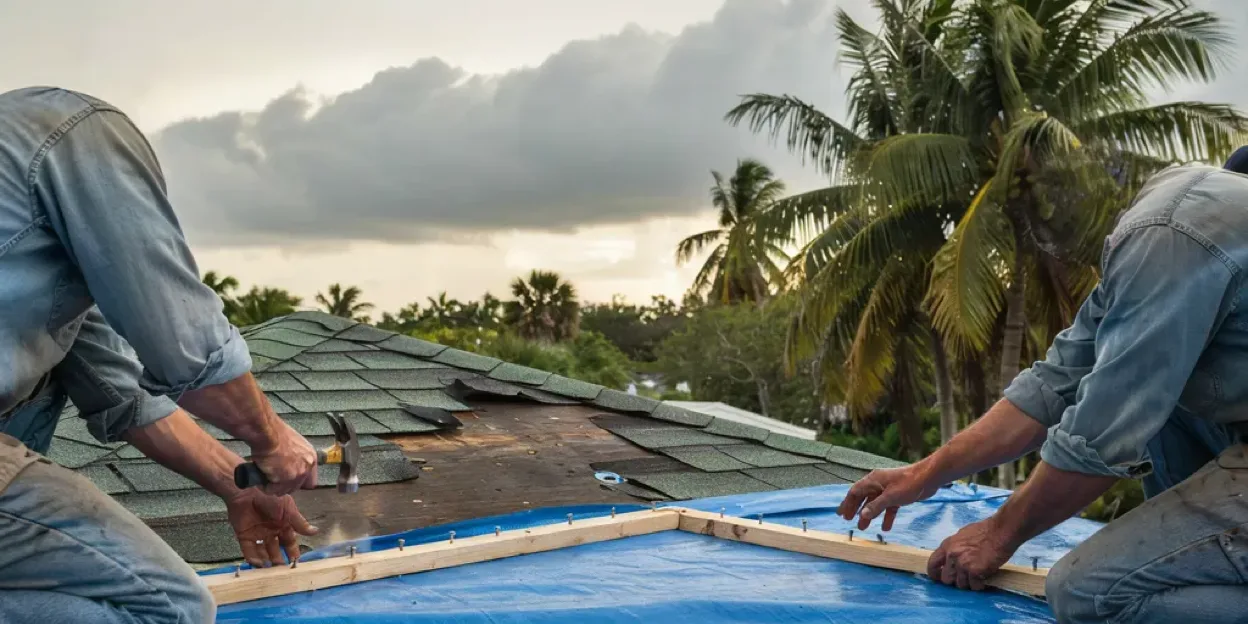
The power is back on in Port Charlotte and the street is full of blue tarps. Yours is not one of them yet. There is a strip of bare underlayment on the back slope where the shingles used to be, and the bedroom ceiling below it is wet. This site connects you by phone with an independent local contractor who handles storm damage roofing in Charlotte County.
The first job is the opening. A contractor gets a tarp over the bare section and battens it down so the next rain band stays out. Before the tarp goes on, they photograph the damage from the roof and from the ground with a date stamp, because once the tarp is on, the damage is covered in both senses.
Then they walk the rest of the roof. Wind rarely takes one clean strip. It creases shingles that are still attached, lifts ridge tiles without moving them far, and drives rain under flashings that look fine from below. The written scope lists what the wind took, what it loosened, and what it left alone.
Stay off the roof. Photograph everything you can see from the ground and every wet ceiling inside, before anything is moved or cleaned. Keep the receipt for anything you buy to protect the house. If water is coming in, buckets and a small drain hole in a sagging ceiling will keep the drywall up until the tarp is on.
Do not sign anything at the door. Then call. Say what the roof is made of and whether water is coming in, and the contractor sorts out the rest.
A tarp is temporary. It buys weeks, not seasons, and a tarp that stays up through a second storm becomes its own problem. The repair that follows depends on what the wind did. A section of lost shingles on an otherwise sound roof is a roof repair. Widespread creasing on a shingle roof past its prime, or tile damage on underlayment that was already at the end of its life, is usually a roof replacement, and the contractor should say which in writing.
Wet insulation and wet drywall below the opening come out. Framing that took water is dried before anything closes it in.
This county has done this before. Charley made landfall at Punta Gorda on August 13, 2004, as a compact Category 4 and peeled roofs in an afternoon. Ian came ashore at Cayo Costa on September 28, 2022, and the eye crossed Charlotte Harbor; Punta Gorda, Port Charlotte, and Englewood took the strongest wind on the north side of the eyewall, and hours of wind-driven rain found openings that did not show for weeks. Milton on October 9, 2024, brought another round of wind and a string of tornadoes across the county.
Each storm brought crews from out of state, and the county's homeowners learned the rules the hard way. Never sign an assignment of benefits at the door; since 2023 new policies do not allow one anyway. Verify the contractor's Florida license at myfloridalicense.com before work begins. Prefer a contractor who will be in the county two summers from now to answer a warranty call. Florida now gives one year from the date of loss to report a claim, and the insurance claims page explains what the contractor's photos and scope do for the adjuster. After the repair, a wind mitigation inspection records what the new work did for the roof's rating.
Have the address ready and say whether water is coming in right now. Be ready to say what the roof is made of, roughly how big the damaged area is, and whether a tarp is already up. Say if the home is a manufactured home. Call (941) 294-6154.
 Standing by
Describe what you see in plain words. The call is routed to an independent local roofing contractor who works tile, metal, and shingle roofs in your part of Charlotte County.
A walk of the roof and the attic side, with photos and a written condition report you can hand a buyer or an insurer.
The state OIR-B1-1802 form completed on your roof's straps, deck nailing, and water barrier, so your agent can apply the credits.
Dated photos, a line-item scope, and a contractor at the adjuster visit, so the claim is about what the roof shows.