
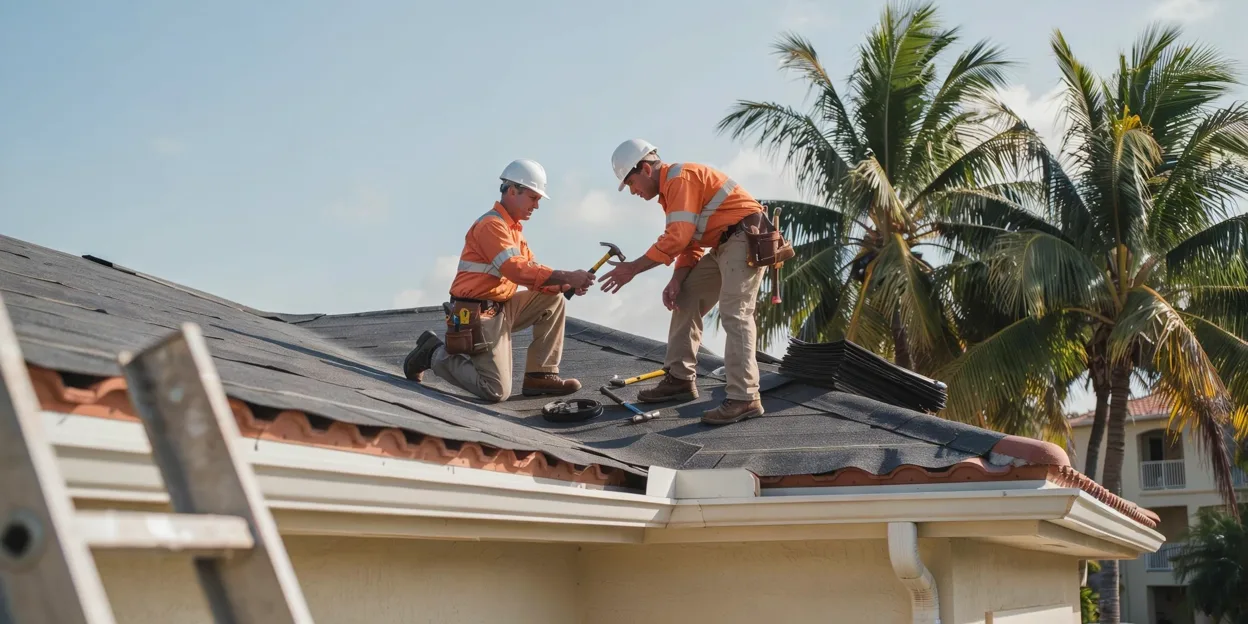
The stain on the lanai ceiling was the size of a coffee cup in June. After the first real afternoon storm of the summer it is the size of a dinner plate, and the paint is starting to bubble. The roof went on in 2005, right after Charley, and nobody has been up there since. This site connects you by phone with an independent local contractor who does roof repair in Charlotte County.
The contractor starts on the roof, not at the kitchen table. Water rarely comes in where it shows up on the ceiling. It enters uphill, at a pipe boot the sun has split, a valley where two slopes meet, a wall flashing that has pulled away, or a tile that slid and left the underlayment bare. On a shingle roof it is often a lifted tab that a gusty front peeled back and a rain band drove under.
They photograph what they find before touching anything. Then they check the attic side if there is access, because a stain on one ceiling can trace to a leak two trusses over. The written scope names the entry point, what gets replaced, and what gets sealed.
If water is dripping, put a bucket under it and move anything you care about out from under the stain. If the ceiling is sagging, poke a small hole in the low point with a screwdriver so the water drains into the bucket instead of bringing the drywall down. Do not go up on the roof. A tile roof is slick and brittle, and a metal roof is worse when wet.
Take photos of the stain and of the roof from the ground. Then make the call. You do not need to know whether it is a boot, a flashing, or a tile. Describe what you see.
A cracked pipe boot, a loose flashing, a handful of slipped or broken tiles, a lifted section of shingle, or a valley that has worn through can all be repaired on a roof whose underlayment is still sound. The contractor can also re-seal ridge and hip tiles that the wind has worked loose, which is common across Deep Creek and Punta Gorda Isles after Ian and Milton.
What cannot be repaired is underlayment that is done. On a tile roof that went on in 2004 through 2006, the tile may have decades left while the felt beneath it does not. Recurring leaks in different places are the sign. When that is what the roof shows, the contractor should say so in writing and point you to roof replacement rather than sell a patch that buys a season.
The county's housing splits by era. Port Charlotte's canal-grid ranches from the 1960s through the 1980s are concrete block with low-slope shingle or flat sections, and a low slope holds water longer than a steep one. The post-Charley rebuild put a wave of tile and shingle on at once, so a whole street can reach the same age together. Out toward Placida and Cape Haze, salt air ages fasteners and exposed metal years ahead of the inland schedule.
Florida's 25 percent rule matters for repairs. If the roof was built to the 2007 Florida Building Code or later, repairing more than a quarter of it no longer forces a full replacement. Older roofs can still trip the rule, and the contractor checks the permit date before quoting. Repairs beyond a small patch need a permit from the county, or from the city inside Punta Gorda, and the contractor pulls it. If the damage came from a named storm, read storm damage roofing first, because the order of steps matters for a claim. If you are not sure what the roof needs, a roof inspection with photos is the place to start.
Have the address ready and know what the roof is made of. Be ready to say where the stain is, whether water is coming in right now, and roughly when the roof went on if you know. Say if the home is a manufactured home or sits in a deed-restricted community. Call (941) 294-6154.
 Standing by
Describe what you see in plain words. The call is routed to an independent local roofing contractor who works tile, metal, and shingle roofs in your part of Charlotte County.
Tear-off to the deck, new underlayment, and tile, metal, or shingle fastened to the Florida Building Code, with the county permit pulled.
A tarp on the opening before the next rain band, then photos and a written scope of what the wind took.
A walk of the roof and the attic side, with photos and a written condition report you can hand a buyer or an insurer.