
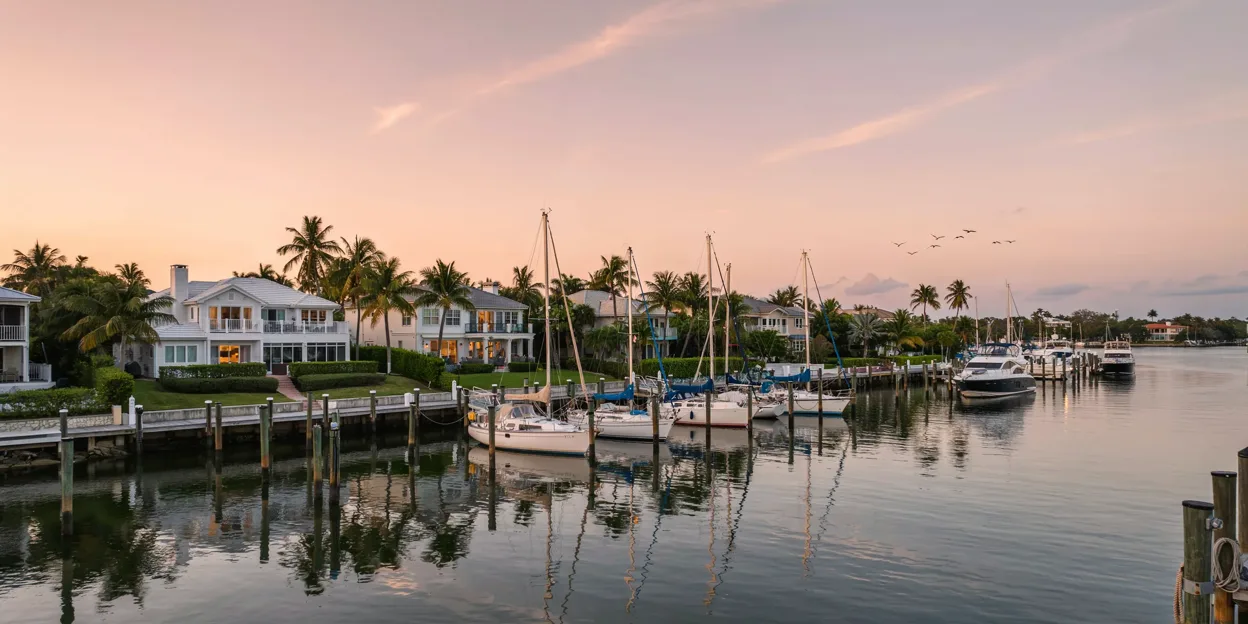
Charlotte Harbor is the older settlement on the north bank of the Peace River, across the US 41 bridges from Punta Gorda. It predates Port Charlotte by decades, and its streets along Bayshore Road hold 1920s cottages, 1950s and 1960s block homes, and a scatter of newer waterfront builds, with a large resort now taking up the riverfront at the bridge.
The community sits low. Ian's surge in September 2022 pushed the river into the Bayshore streets, and the wind that came with it worked over a housing stock that had already seen Charley cross the river in 2004. Roofs here range from pre-code plank decks with toe-nailed trusses to brand-new metal, and two houses side by side can need completely different work.
This site connects Charlotte Harbor homeowners by phone with an independent local roofing contractor. It does not perform the work.
An older home whose roof has never been documented for the insurer is a wind mitigation inspection, and a pre-2004 house often has the most to gain from adding straps where the attic allows. A 1960s block home with a shingle roof that is on its second or third layer is a roof replacement down to the deck, with the deck re-nailed. A leak at a chimney or a wall flashing on a cottage is a roof repair once the entry point is found.
Bayshore Live Oak Park on the riverfront is the community's front porch and the place that shows where the surge line reached. The Sunseeker Resort at the foot of the bridge opened in late 2023 after Ian delayed it a year. Roofing permits go through Charlotte County Community Development.
Call (941) 294-6154 to be connected with a local roofing contractor serving Charlotte Harbor.
A leak traced to its real entry point, then the flashing, boot, tile, or shingle that let it in put right and photographed.
Tear-off to the deck, new underlayment, and tile, metal, or shingle fastened to the Florida Building Code, with the county permit pulled.
A tarp on the opening before the next rain band, then photos and a written scope of what the wind took.
A walk of the roof and the attic side, with photos and a written condition report you can hand a buyer or an insurer.
The state OIR-B1-1802 form completed on your roof's straps, deck nailing, and water barrier, so your agent can apply the credits.
Dated photos, a line-item scope, and a contractor at the adjuster visit, so the claim is about what the roof shows.