
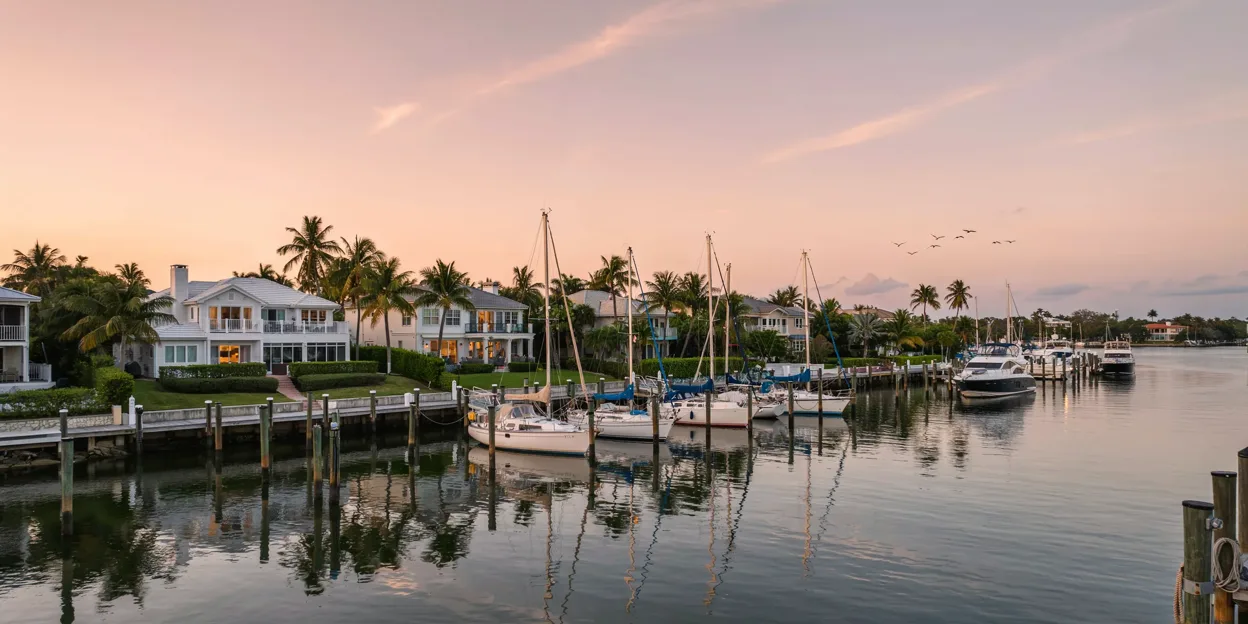
Port Charlotte was never a town so much as a plat. General Development Corporation laid out the canal grid in the late 1950s and sold lots by mail, and the houses went up in waves through the 1980s: concrete block, slab on grade, low-slope roofs, a lanai on the back facing a canal that runs to the harbor. Thousands of those roofs were shingled in the post-Charley rush of 2004 and 2005 and are now at the age where insurers write letters.
Ian's north eyewall crossed this part of the county on September 28, 2022, and the roof over an intensive care unit at the hospital off Tamiami Trail came apart in the wind. Milton in October 2024 sent tornadoes across the same neighborhoods. Between them, a lot of tarps went up along the grid and some are still there.
This site connects Port Charlotte homeowners by phone with an independent local roofing contractor. It does not do the work.
A stain on a lanai ceiling or a lifted tab on a low-slope shingle roof is a roof repair, and on a low slope the water sits longer, so it does not wait well. A 2005 shingle roof that an insurer will no longer write is a roof replacement conversation, and the contractor should say in writing whether a repair would do. A post-2004 roof that has never been documented is a candidate for a wind mitigation form, which many grid homes have never filed.
Port Charlotte is unincorporated, so roofing permits go through Charlotte County Community Development in Murdock. When a storm has come through, HCA Florida Fawcett Hospital off Tamiami Trail is the emergency room for the north side of the harbor. On a normal week, Port Charlotte Beach Park at the end of Harbor Boulevard is where the grid meets the water.
Call (941) 294-6154 to be connected with a local roofing contractor serving Port Charlotte.
A leak traced to its real entry point, then the flashing, boot, tile, or shingle that let it in put right and photographed.
Tear-off to the deck, new underlayment, and tile, metal, or shingle fastened to the Florida Building Code, with the county permit pulled.
A tarp on the opening before the next rain band, then photos and a written scope of what the wind took.
A walk of the roof and the attic side, with photos and a written condition report you can hand a buyer or an insurer.
The state OIR-B1-1802 form completed on your roof's straps, deck nailing, and water barrier, so your agent can apply the credits.
Dated photos, a line-item scope, and a contractor at the adjuster visit, so the claim is about what the roof shows.