
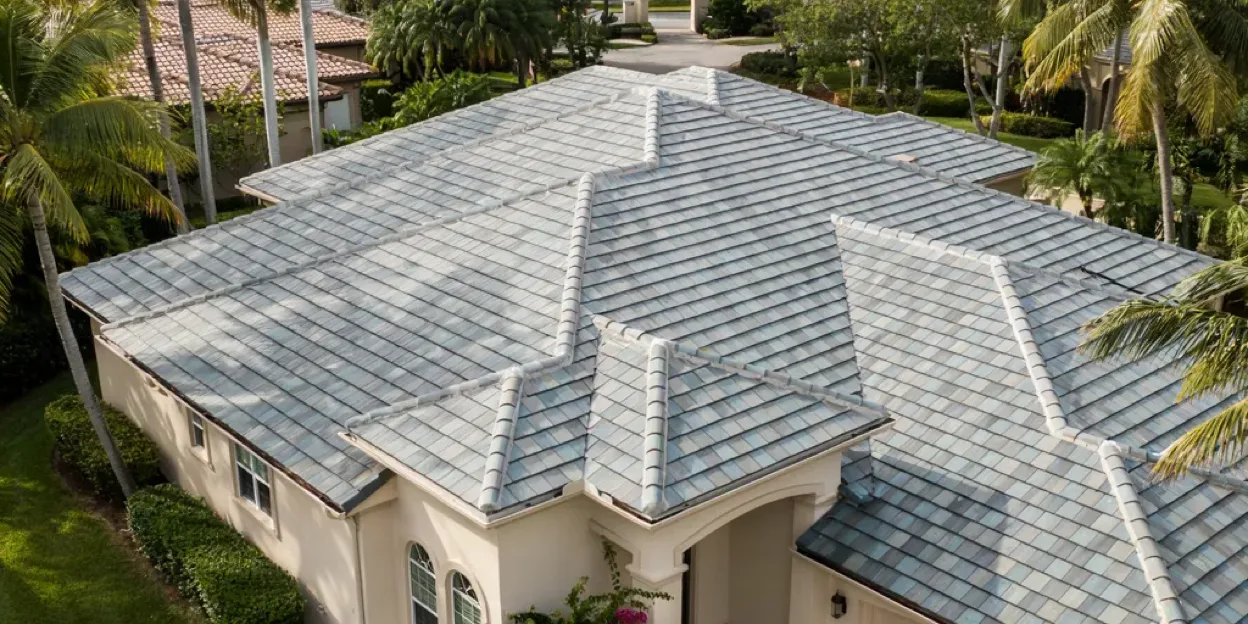
South Gulf Cove is the largest canal plat in the county, a General Development grid from the late 1960s south of Route 776 and west of the Myakka, with more than fifty miles of canal that reach Charlotte Harbor through a single lock. It sat mostly empty for decades. Since the 2000s it has filled in fast, so the housing is newer than the rest of the Port Charlotte grid: block homes with hip roofs, shingle on the earlier streets, tile and metal on the newer ones, and vacant lots still between them.
New does not mean untested. Ian's eyewall passed just south on September 28, 2022, and the wind came across the harbor and the open lots with nothing to break it. Milton in October 2024 added a second round. Roofs built to the current code held up better than the older grid, and the damage that did occur was often at ridge caps and edge metal.
This site connects South Gulf Cove homeowners by phone with an independent local roofing contractor. It does not perform the work.
A 2006 shingle roof that is now getting an insurer's roof-age letter is a roof inspection with a written condition report. A newer roof that lost ridge caps or drip edge in Ian or Milton is a roof repair once the loose sections are found. A roof built to the current code with straps and a sealed deck that has never been documented is a wind mitigation form the carrier has not seen.
The South Gulf Cove Homeowners Association is a voluntary association, so it publishes community news and the lock schedule rather than roof rules; material choices are between the owner and the county. Roofing permits go through Charlotte County Community Development in Murdock.
Call (941) 294-6154 to be connected with a local roofing contractor serving South Gulf Cove.
A leak traced to its real entry point, then the flashing, boot, tile, or shingle that let it in put right and photographed.
Tear-off to the deck, new underlayment, and tile, metal, or shingle fastened to the Florida Building Code, with the county permit pulled.
A tarp on the opening before the next rain band, then photos and a written scope of what the wind took.
A walk of the roof and the attic side, with photos and a written condition report you can hand a buyer or an insurer.
The state OIR-B1-1802 form completed on your roof's straps, deck nailing, and water barrier, so your agent can apply the credits.
Dated photos, a line-item scope, and a contractor at the adjuster visit, so the claim is about what the roof shows.